
The most common thing I hear from a client about the day of their accident is that they felt fine. They stood at the scene, they answered the officer's questions, they told the adjuster on the phone that they were okay, and they went home. Then that night, lying in bed, it started.
That's the adrenaline coming down. And the gap between feeling fine and being hurt, which is usually a matter of hours, is where a lot of claims quietly get weaker.
Where a person gets checked out in the Inland Empire matters less than most people assume. When they get checked out matters more than almost anything else in this book. Which hospital or urgent care ends up seeing them depends a lot on which part of the two counties the accident happened in. The guidance in this chapter works either way.
The adrenaline wears off around bedtime
After a car accident a person may feel fine because of the adrenaline rush, and it takes time for that to settle down. Sometimes the symptoms don't appear right away.
I hear this from clients all the time. Usually it shows up once they get home, when they're getting ready for bed and lying down. That resting state is when the pain kicks in. If not, it's the morning after. The next day they wake up and it feels like they got hit by a truck.
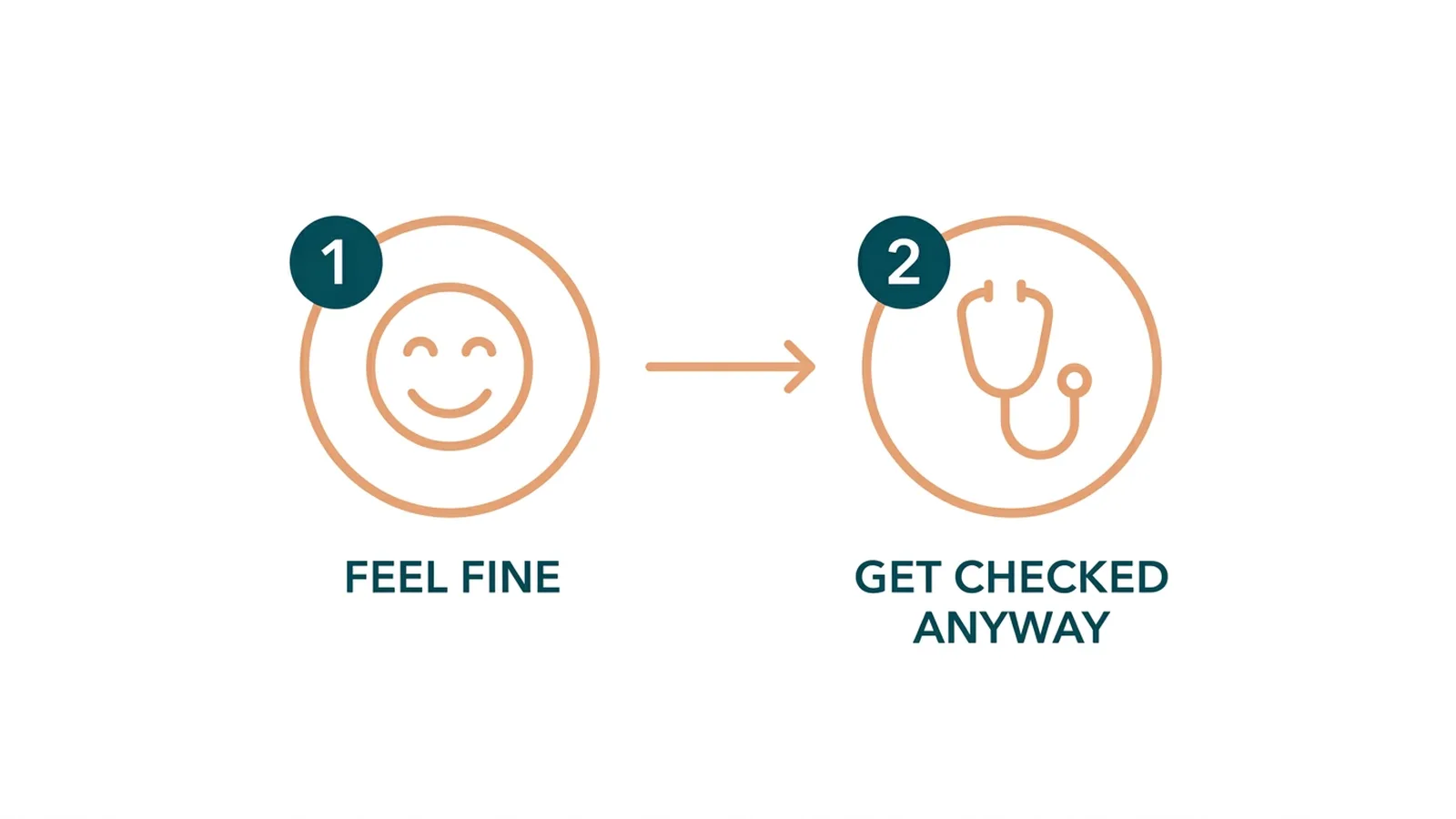
And even if you wake up the next day and you are not feeling any symptoms, still go to any nearby urgent care.
I don't hedge on that one. Prompt documentation is crucial, not only for your health but for your claim. The inconvenience of a visit that turns up nothing is very small next to what that visit does for you later.
So the next day they'll wake up and it'll feel like they got hit by a truck. And even if you wake up the next day and you're not feeling any symptoms, still go to any nearby urgent care.
The urgency is not only medical. Chapter 8 goes into what an adjuster does with a gap between the accident and the first medical visit, and the short version is that they fill it in with whatever helps them. Maybe you slept wrong. Maybe you went to the gym. Maybe you were carrying something, things of that nature. Anything could have happened in that week, and that's exactly the argument. Getting seen the same day or the next day takes that argument away before anybody thinks to make it.
If you have no symptoms and you feel silly walking into an urgent care, here's the whole script. Say, "I just got into a car accident, I just want to get checked out and make sure I am okay." That's enough. That visit is also where the paper trail starts that eventually becomes the economic damages in Chapter 7. Without a bill and a diagnosis on record, a settlement demand has nothing concrete to point at.
Urgent care or the emergency room?
Start at urgent care unless you're having concussive symptoms.
If you're having concussive symptoms, go to an ER. I do understand that an emergency room is an all day thing, and if you are not trying to lose the whole day to it, urgent care is the reasonable default. But urgent cares don't have CT scan machines. So if you go to one and describe concussive symptoms, they're going to stop and tell you to go to the ER for a CT scan anyway. You'll have spent the wait for nothing.
As for which one, I would say go wherever your health insurance is taken. It does not matter where it is. With no health insurance, the closest and cheapest one is the right answer.
Here in Norco there is not a hospital, but there's an urgent care down on Hamner, across the street from the Target area, and they usually take all the major health insurances. Closer to the Eastvale side, up Hamner toward 6th Street, there's another one that also takes major insurance. For an ER, the closest is Corona Regional, and they take major health insurance as well. The rest of the region has its own equivalents, and the right move is just to Google the nearest urgent care and go.
If you have no insurance and no money for the visit
This is the situation people are actually in when they don't go, so let me take it seriously rather than telling you to go anyway.
If you don't have health insurance and you end up at an ER, depending on your financial situation, you can apply for Emergency Medi-Cal. It's a California government funded health insurance program, and it gives you temporary health insurance that the government pays for at the time. Whether you qualify depends on your finances and your assets. You wouldn't necessarily know in the moment, but you can apply and see.
The numbers are worth knowing. An urgent care visit without insurance is typically a little less than $200. An ER visit, especially with concussive symptoms where they're going to run a battery of tests, gets expensive fast depending on how long the stay is. That's a real reason to start at the local urgent care when the symptoms allow it.
And if none of that works, there's still an answer. We have urgent cares that will see you on what's called a personal injury lien basis, where the provider treats you now and waits for the case to be over before they're paid. Chapter 10 covers how that arrangement actually works, because it has real consequences you should understand before you sign one. I would rather you use your own health insurance or pay out of pocket first if either of those is possible. The lien is a good tool, but it's closer to a last resort than a first choice.
If you are not sure which of these fits you, don't guess. Call us, or call any attorney, and find out what your options are. Both Emergency Medi-Cal eligibility and a lien arrangement turn on specifics that are genuinely hard to evaluate from the outside.
Why some doctors turn accident patients away
There's a complication here that catches people off guard, so I warn clients about it in advance.
Sometimes doctors straight up refuse to see you the moment you say you got into a car accident.
It has nothing to do with the injury. These doctors know the case could possibly be litigated in the future, and they don't want to get dragged into a potential lawsuit. A doctor who treats an accident patient can end up subpoenaed for records or asked to testify. So some practices just say no, you can't be seen here.
It happens more often to people on Medi-Cal, Medicare, or other government sponsored health insurance, where it's already hard to get treatment in a timely fashion and approvals take a long way around. Let's say you need physical therapy. On a government plan that can be a five month wait before anybody signs off on it. Someone with a PPO can usually go wherever they want, see whoever they want, whenever they want, and this is less of an issue.
When somebody is in a lot of pain and their own health insurance can't get them seen, we'll help coordinate the medical treatment they need. That's part of why having an attorney involved in a lien matters beyond the payment terms in Chapter 10. It solves an access problem most people don't see coming.
Common Questions
- Why would a doctor refuse to treat me after a crash?
- Some doctors will straight up refuse to see you the moment you say you were in a car accident. It has nothing to do with the injury. They know the case could be litigated later, and they don't want to be pulled into a lawsuit as a witness or a records source. An attorney can usually coordinate treatment with a provider who does see accident patients, including one who works on a personal injury lien.
- Should I see a doctor after a crash even if I don't feel hurt?
- Yes. Go the same day or the next day regardless of symptoms. Adrenaline commonly delays the pain until you're home and lying down, or until the next morning. Prompt documentation protects your health and your claim at the same time. Waiting until the symptoms are undeniable hands an adjuster room to argue that something else caused the injury in the meantime.
- What's the difference between going to urgent care and the ER after a crash?
- Urgent care is the default unless you have concussive symptoms, because an ER visit is usually an all day thing and urgent care handles most crash injuries. If the urgent care staff suspect a concussion, they'll send you to the ER anyway for a CT scan, because urgent cares don't have the machine for it.
- What if I don't have health insurance and can't afford to see a doctor after an accident?
- Emergency Medi-Cal is one option, a California government funded program that provides temporary coverage depending on your finances and assets. The other is a personal injury lien, usually arranged through an attorney, where a provider treats you now and gets paid after the case resolves. An urgent care visit without insurance is typically a little under $200, which is worth weighing against both.
Chapter Reflection
The distance between "I feel fine" and "I am hurt" after a car accident is usually just a few hours of adrenaline wearing off, and that stretch is where claims quietly get weaker. A visit that costs you an afternoon protects your health and closes a gap somebody else would otherwise fill in for you. So go. Walk in, say you were in a car accident and you just want to get checked out, and let somebody write it down. A little less than $200 at an urgent care, an afternoon out of your week, and it's handled.