
How Fault Gets Decided, and Why the Inland Empire's Two Counties Differ
A claim does not get decided in a vacuum. It gets decided by the evidence that happens to exist, by which of our two counties you were in when it happened, and if it goes far enough, by which judge your case lands in front of.
That last one is a lottery, and I'm only half joking when I say it.
Most of this chapter is about things you don't control. I'm putting them in the book anyway, because knowing them explains why two people with the same crash can have completely different experiences, and because a couple of them you can steer at the scene if somebody tells you in advance.
Who gets to decide fault
Fault is determined by evidence. Police reports, witness statements, physical evidence, meaning the pictures and videos of how the cars ended up positioned when the accident finished. And sometimes expert analysis, where an accident reconstructionist takes all that information and says, this is how the accident happened.
Now here's the misconception I correct most often. Nobody at the scene has the final word.
The responding officer records observations and writes his or her opinion, and that opinion is not legally binding on anyone. The insurance adjuster assigns a fault percentage to protect their company's bottom line, which is nothing more than a biased negotiating position. The other driver has a version. All three of those are positions, not rulings.
The only entity that can officially and legally assign these percentages is a jury in a California Superior Court, Riverside or San Bernardino out here. Until a jury puts those numbers on a verdict form, the comparative fault percentages stay entirely negotiable, based on the strength of the evidence we bring.
Which brings up the thing about police reports that surprises people.
The police report itself is legally what's considered hearsay evidence. So it's not admissible when it comes to court. If you were going to go to trial, cannot submit the police report and let the jury have at it and read it. But when it, even if the police report is not admissible, it's still very helpful.
You would have to bring in the police officer, and the officer would state what they remember about the accident and what they put in their report.
So the report is a strange document. It can't be handed to the jury, and outside the courtroom the insurance companies treat whatever it says as gold. As long as you are not put at fault on it, it's very helpful, because it stops the other side from claiming the accident happened some other way.
I've seen situations where the insurance company still says your client is at fault even with the report against them. It happens. It's rare. In a situation like that you just file suit, move into the litigation process, and get the compensation that way.
It's also worth remembering why officers get it wrong sometimes. They arrive long after the crash. The cars have often already been moved. Witnesses couldn't wait that long. They're working from brief fragments of physical evidence and two conflicting stories, and they are not performing a true accident reconstruction the way an expert would. It gets worse when a client's first language is not English, and the officer ends up saying, I understand the other guy better, his story makes sense. Then the report comes back not in your favor, and we overcome it with independent witnesses, dash cam and surveillance footage, and if the case supports it, a reconstructionist.
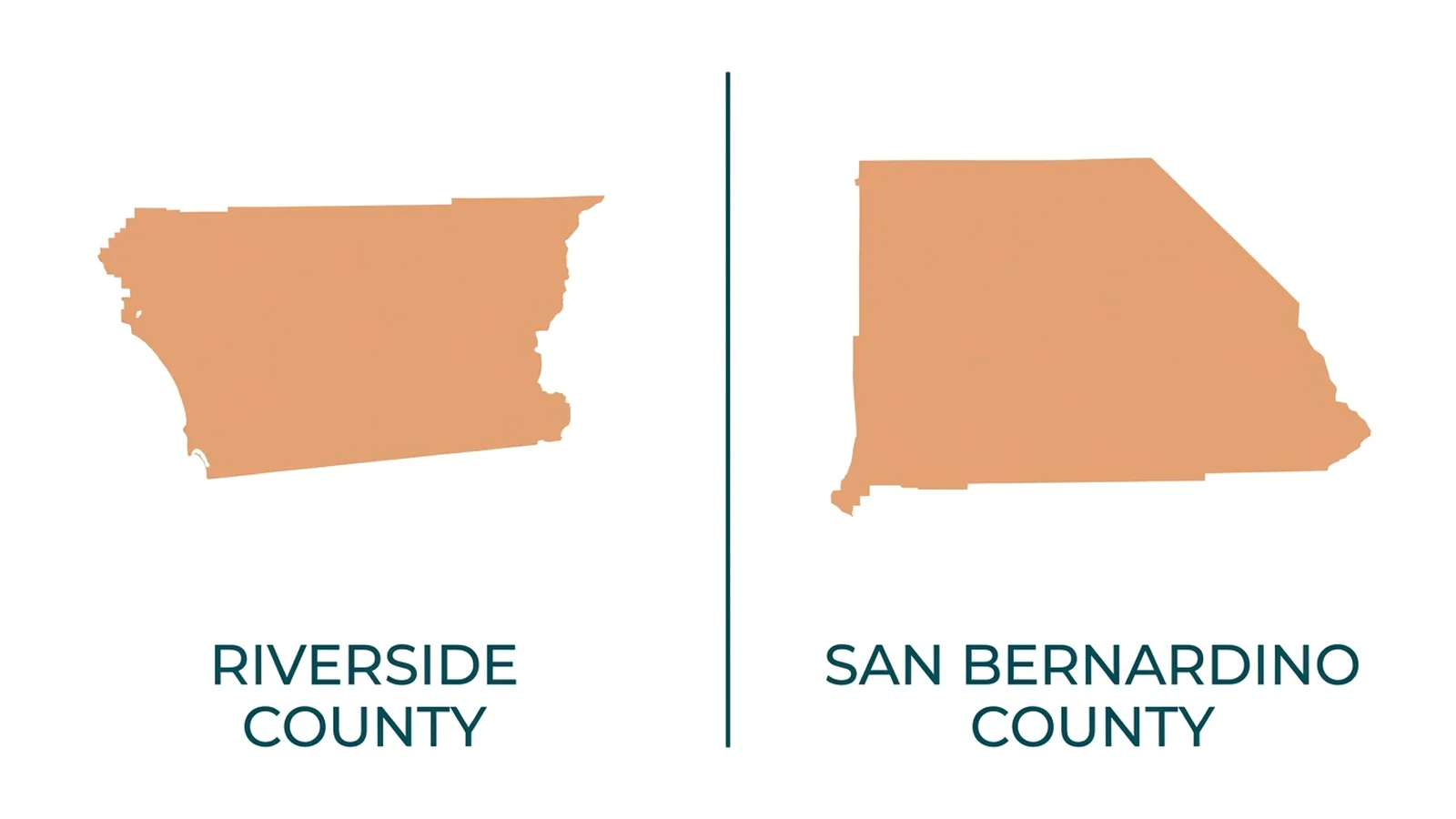
The two counties are genuinely different
Which county the crash happened in decides which agencies investigate and which court handles the case if it goes into litigation. It also changes something much more immediate, which is whether anybody comes out at all.
If it's San Bernardino County, more likely than not the police are not going to come out. I think it's just the crime rate over there. It's very high, so a lot of times they won't show up. And even when they do make a report, it takes a very long time for the department to produce it, because they're busy dealing with other things.
So in San Bernardino, it's very important that you say you're hurt. If you have to, call the ambulance and ask them to send the paramedics. Sometimes that helps get police out, and then they'll come and do the report.
Riverside, I think, is a lot better when it comes to that. But you still most of the time need to say that you're injured, or they won't come out.
Inside Riverside County there's another layer that only matters if you're around here. In Norco, a lot of times the Riverside Sheriff will come out. I have also seen a lot of reports filed by the Jurupa Valley Police Department, and I prefer the Riverside County Sheriffs. Jurupa Valley takes a long time, and there are no real time estimates on when a report will be ready. We've waited until infinity and beyond for a report that ultimately never comes. That's a problem when you're trying to resolve a liability dispute in a he said, she said situation.
So if you can, call the Riverside Sheriff's Department. You can pull it up on your phone and Google it, or call 911 and they'll transfer you. And if you're on the freeway in Norco, the 15 or the 91, that's CHP jurisdiction and a highway patrol officer writes the report.
The judge you draw changes the case
Once you file the lawsuit, you get assigned a judge. Which judge you get, I would say, is effectively random.
It's like a lottery. So if you file the lawsuit, you get assigned a judge. And depending on that judge, even though the judges are supposed to be neutral magistrates... there's things that we know about some judges and they have these internal biases... it'll change the trajectory of the case and which direction to go.
When we go to our hearings, we get a kind of good idea of where they stand. And depending on that, we make a determination and say, you know what, this is a case we need to settle, or this is a case I think we might win at trial.
This is the clearest example in the book of something you have no control over that genuinely affects your outcome. It's also the reason experienced representation matters most after the adjuster stage, once a case is in litigation, rather than during the phone calls at the beginning.
The lottery also explains why all of this takes so long, and the arithmetic is worth seeing.
In California you have two years to file a lawsuit. Sometimes a client is still treating right around that two year mark, and we haven't even talked about negotiating the case, because we don't know what it's worth while they're still treating. So we file suit just to preserve the statute of limitations in Chapter 12.
Two years have already gone by, and the client is exhausted. For us, two years is more like two weeks. It goes by very quickly. For them it feels like a very long time.
Then you get into litigation and it multiplies. We have such a big backlog in California, because everybody sues everybody for whatever, that when you ask the judge for a trial date they'll typically give you one about two years out. So the client has already done two years and now they have two more. That's four years.
And there are always opportunities to settle at any time. But a lot of the game these insurance companies play is seeing who blinks first. Sometimes that means getting all the way to trial before the case settles for what it's worth.
Trial prep is intense. Binders that fill up half a room, loaded onto trolleys, hauled into court. You park a mile from the courthouse, walk in, and then the case settles. The first three times that happened to me I was so deflated. After that I learned it's just part of the game. They have to know you're serious. If they sense you are not, they'll keep lowballing until they realize this is really going to trial, and then they fold.
When you have to arbitrate against your own insurance company
Not every fight over value goes in front of a judge or a jury.
When you have a dispute with your own client's insurance company, you are not allowed to sue them the way you sue a defendant driver. Inside that long contract you signed when you bought your policy, there's something called an arbitration provision. Basically it says, if you have any problems with us and you don't agree with how we handled your claim, you have to sue us behind closed doors.
That's by design. If these disputes went in front of juries, you would see every insurance company out there buried in lawsuits, and it is not a good look for them.
So it happens behind closed doors. We hire a retired judge, called an arbitrator, to be the trial judge at the end of it. Instead of a trial date you get an arbitration date, and your case is in the hands of one person.
Here's how one of those went.
Our client's own insurance company offered nothing. They said he had been made whole, that he had already gotten enough compensation from the other side, and there wasn't a penny more they would give. We disagreed, so we went to arbitration.
The arbitrator showed up about 30 minutes late, frazzled, putting on his jacket, looking like he had just gotten out of bed. It wasn't a good start, and I was a little concerned that he wasn't taking the case seriously and had forgotten about it.
During the arbitration I cross-examined one of their doctors, an expert the insurance company had hired to explain why all of our client's medical treatment was unnecessary and that he should have been fine with a little chiropractic care. And I got that doctor to admit things that were in favor of our client, which is really rare, because they're paid by the insurance companies not to help our clients. It was a big moment for me.
But he didn't rule from the bench. It is not like a trial where the jury comes out and tells you the result right then. He took it under submission and said he would give us the results in a month. There was no court reporter. Nobody was recording it. So there was no way for him to go back and check anything. It was just him trying to remember what happened.
The client still ended up walking away with a pretty good chunk of compensation. It wasn't ideal, and we weren't able to collect the additional funds from the underinsured motorist coverage that I thought the evidence supported.
What I took from it is that justice is not always done just because you do all the right things and say all the right things. There are so many different variables that can affect the way a case plays out. It's a gamble, and it's really based on who flinches first. Hopefully you pick the right arbitrator. We'll probably never pick that one again.
Common Questions
- How is fault decided in a crash claim in the Inland Empire?
- By evidence. Police reports, witness statements, physical evidence like the photos of where the cars came to rest, and in complex cases an accident reconstructionist's analysis. The county also decides which agency investigates and which court hears the case. And the only body that can officially assign fault percentages is a jury, not the officer and not the adjuster.
- Is a police report admissible as evidence in a California car accident trial?
- No. It's legally considered hearsay, so you can't submit it and let the jury read it. The officer has to come in and testify about what they remember. Outside the courtroom, though, adjusters treat it as gold, which is why it's still worth having even though nobody on a jury will ever see the document itself.
- Do San Bernardino County and Riverside County handle crash police response differently?
- Yes. In San Bernardino, more likely than not the police are not going to come out, and when they do the report takes a long time to produce. Say clearly that you're hurt, and ask for paramedics if you need to, since that often brings an officer. Riverside is a lot better, though you usually still have to say you're injured.
- Does it matter which judge is assigned to a car accident lawsuit in California?
- It can. Assignment is effectively a lottery once suit is filed. Judges are supposed to be neutral magistrates, and there are things we know about some of them. We get a read at early hearings, and that read changes whether a case is one to settle or one to take to trial.
- What happens if you have a dispute with your own insurer over an underinsured motorist claim?
- Your policy almost certainly has an arbitration provision, which means you sue them behind closed doors instead of in front of a jury. A retired judge hired as an arbitrator decides it alone. Strong evidence still moves the needle, and I've gotten an insurer's own hired expert to make admissions helping our client. But there's often no court reporter, so the whole thing rests on one person's memory a month later.
Chapter Reflection
Almost nothing in this chapter is yours to decide. Not the county, not the responding agency, not the judge, not whether the arbitrator slept well. What's yours is the evidence, and that part performs the same in Riverside as it does in San Bernardino, in front of a good judge or an indifferent one, with a jury or with one retired guy in a conference room. So when people ask me what an attorney is for, this chapter is most of my answer. Somebody has to have built the file already, before you ever find out which county, which agency, which judge. By the time you know any of that, the footage has looped over and the witnesses have moved.