
A claim can fail for reasons that have nothing to do with who caused the crash or how badly you were hurt. It can just run out of time.
I have watched it happen to people who were doing everything right. Still treating, still talking to the adjuster in good faith, no idea a clock was running underneath the whole conversation.
There are five different clocks in this chapter. Two years, six months, 45 days, 30 days, and 24 hours. None of them wait for you to finish recovering, and none of them announce themselves.
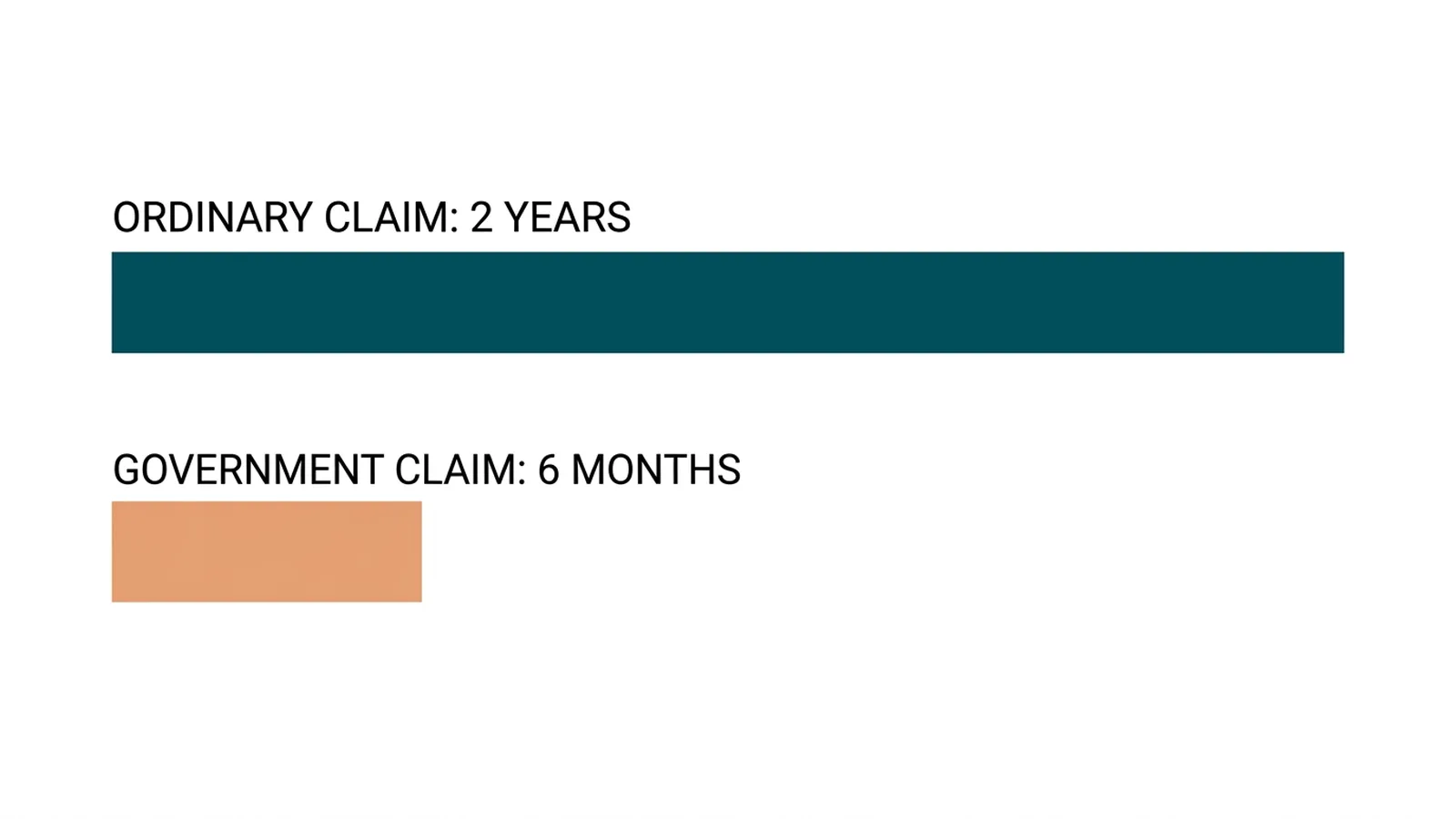
Generally, you have two years from the date of the accident to file a lawsuit. If you miss the deadline, you lose your right to sue... even if you are in the middle of, let's say, negotiating your case... they had zero obligations to pay you anymore.
Negotiating does not pause the two years
Generally you have two years from the date of the accident to file a lawsuit. Miss the deadline, and you lose your right to sue.
And if you lose your right to sue, even if you're in the middle of negotiating your case, even if you're right around the time of settling and going back and forth a little bit, they have zero obligations to pay you anymore.
Whatever offer was on the table can be taken off. There can be zero recovery for you, and whatever you were doing is gone.
Some of them do that deliberately, because a delay is not always incompetence. Dragging a settlement toward that two year mark is a strategy, and then little did you know you just lost all your right to recover anything.
Here's how that plays out in practice on our end. Sometimes a client is still treating right around the two year mark, and we haven't even talked about negotiating the case, because we don't know the value of the case while they're still treating. So we file suit purely for the purpose of preserving that two years, and then we continue on with whatever we were doing.
I want to name what that feels like from the other side of the desk, because it is not a small thing. For us, two years is more like two weeks. It goes by very quickly. For a client it feels like a very long time, and this is usually the first time they've been through anything like it. Learning after two years of treatment that your case now has to become a lawsuit just to stay alive is exhausting on top of an injury that was already exhausting.
So I explain the filing decision up front, in plain terms, instead of letting somebody find out halfway through their treatment that a lawsuit quietly became necessary.
When a government entity is involved, it's six months
Claims against government entities like Caltrans or a city have a six month deadline. And this is the part people get wrong. It's a six month deadline to file a claim with that entity, not to file the lawsuit.
A lot of times these get complicated, because first you have to figure out who owns the thing that hurt you.
Let's say you have a case against public bus transportation here in the city of Norco. Who owns the bus? Which city is it? Usually these city buses go everywhere. You have the Riverside Transit Agency, the RTA. You have the county of Riverside. You have the city of Norco. You have the Department of Transportation of California.
So even if you're not sure, file it with all of them. File the claim with every potential entity within that six months. That's the same instinct behind the SR-1 in Chapter 3, and it's the right instinct every time a filing window is involved.
Here's the punishment for guessing wrong. Once you mail that claim, the entity has 45 days to respond. And if they realize you filed with the wrong place, they may wait until that last day to send you a letter saying you filed in the wrong place. Now you just blew your statute, because you filed at the last minute and there's no time to file it anywhere else.
I always send it with tracking, so I can calculate the 45 days precisely from the day they received it rather than guessing.
Then the second clock starts. If the entity denies the claim, and if they're nice they'll send you a letter saying denied, you have six months from that date to file the lawsuit. If they never send you a written rejection, that six month clock never starts, and you have two years from the date the claim arose instead. Do not read silence as a shorter deadline.
So with government entities, everything is shortened and you have to move quickly. If there's any chance a city bus, a Caltrans truck, or any other government vehicle is involved, calling an attorney is urgent rather than routine. Working out whether the responsible party is a city, a county, a regional transit authority or a state agency is not a thing you want to be learning on month five.
The extension for minors
For someone under 18 at the time of the accident, the clock moves the other direction.
Usually the parent or guardian is the one to file the claim, negotiate, and settle the case on the child's behalf. That's because legally, even at 17 and a half, a minor can't enter into a contract, so the parent signs.
But if the parents are not involved and the injuries are significant, the law allows the injured person two years from the day they turn 18. So the day you turn 20 is the last day you can file a lawsuit on an accident you had while you were a minor.
That extension exists for the same reason the limitation existed. The thing that stopped them from filing was a legal disability, so the clock waits until the disability is gone.
The 24 hour rule after a hit and run
This is the shortest clock in the book, and almost nobody knows about it.
If you're the victim of a hit and run, there are three things California law requires before your uninsured motorist coverage will pay. First, the other car has to have actually made contact with you or your vehicle. If somebody runs you off the road and never touches you, that coverage generally doesn't apply, no matter how badly you're hurt. Second, you have to report it to the police within 24 hours. Third, you have to give your own insurance company a sworn statement within 30 days.
Those conditions come from the statute, so they are the same at every carrier, Mercury included. Uninsured motorist coverage is what protects you when the other side can't be identified, or when they just don't have insurance at all. Let's say they forgot to pay their bill that month, so they have no coverage. It covers you there too. It's the same uninsured and underinsured motorist coverage from Chapter 4, triggered here by somebody who fled instead of somebody who carried too little.
The way it pays is worth understanding, because it's better than people expect. Your own insurance company pays out on your claim. Then after they pay, they go after the other party and get their money back. So you never have to find or collect from the driver who ran. Your policy makes you whole and your insurer takes on the job of chasing the other side, which is why this coverage still protects you against a driver who could never have paid a judgment anyway.
The reason for the 24 hour rule is fraud. They don't want people causing accidents on their own and claiming injuries, or backing into their own wall and saying it was a crash. Their logic is that if you called the police and the police came out and investigated, more likely than not it's a real legitimate claim. Somebody committing insurance fraud is not going to invite the police over.
Missing the 24 hours can end the claim. It's written into the statute, and courts have treated it strictly. I had one situation where the client didn't file within 24 hours and we still won in arbitration, but that turned on the specific facts of that case, and it's not something you should count on. Don't put yourself in a position where you need an exception. Call the police, make a report, and then contact your insurance company and give them the report number.
And if the crash involved a motorcycle accident or a truck accident, where injuries tend to be worse and the coverage questions get more complicated, make the call early.
Common Questions
- How long do I have to file a car accident lawsuit in California?
- Generally two years from the date of the accident. Miss it and you lose the right to sue permanently, no matter where negotiations stood. An insurer that was actively discussing settlement with you has zero obligation to pay once that window closes, and any offer on the table can come right back off it.
- What's different about filing a claim against a government entity, like a city or Caltrans, after an accident?
- The window is six months, and it's six months to file a claim with the entity, not to file a lawsuit. They then have 45 days to respond. If they reject the claim in writing, you have six months from that notice to file the lawsuit. If no written rejection ever comes, the lawsuit deadline is two years from the accident, not six months after day 45. Identifying the right entity is genuinely hard, so we file with every plausible one.
- Does the statute of limitations work differently for a minor injured in a crash?
- Yes. Usually a parent or guardian files and settles on the child's behalf, because a minor can't legally enter into a contract, even at 17 and a half. If that does not happen and the injuries are significant, the two years run from the day they turn 18, so the day they turn 20 is the last day to file.
- What should I do if the other driver in my accident does not have insurance or flees the scene?
- If the driver fled, call the police and report it within 24 hours. For a hit and run, California law also requires that the other car actually made contact with you or your vehicle, and that you give your own insurer a sworn statement within 30 days. Those conditions come from the statute, so they apply at every carrier, Mercury among them, and missing the 24-hour report can end the uninsured motorist claim outright. If the other driver stayed but has no insurance, the hit-and-run conditions don't apply, and the claim goes to the same uninsured motorist coverage on your own policy.
- How does uninsured motorist coverage actually pay me if the at-fault driver can't be found?
- Your own insurance company pays out on your claim first. Then they go after the other party themselves and get their money back. You never have to locate or collect from the missing driver yourself, which is the whole reason this coverage protects you against somebody who fled or who never had a dollar to pay a judgment with.
Chapter Reflection
Five clocks, five different lengths, and not one of them tells you it started. That's what makes deadlines different from every other risk in this book. An adjuster's tactic you can recognize and push back on. A thin evidence file you can go strengthen. A missed deadline offers you nothing, because by the time it's obvious, it's already finished. So my rule across all five of them is the same, and it is not a lawyer's rule, it's a rule for anybody. When there's a filing window and any doubt at all, file. Nobody has ever been hurt by filing something they didn't strictly have to file.